
“On December 12, 1951, the agricultural machinery industry was declared of national interest, and from that moment on, things have changed a lot, especially in the technological aspect, both in the development and generation of technology. Argentina is today among the main countries in technology generation, development and incorporation. We generate technology abroad and incorporate technology from abroad”.
With these words Leandro Brito Peret, Executive Director of AFAT (Association of Argentine Tractor and other agricultural and industrial equipment manufacturers) kicked off the meeting organized by the Association at the facilities of the Argentine Rural Society in Palermo, to celebrate the Agricultural Machinery Day.
“The incorporation of technology improves the speed of processes,” said Peret, and “also greatly improves the accuracy of planting and harvesting, saves time and inputs, and plays an important role in the outcome of agricultural campaigns, generating economic benefits that are visualized in the very short term. These have been profitable investments from day one. We also celebrate the fact that AFAT is a great articulator of this technology generation in the country; the associated companies are generators and incorporators of first level technology”.
As you all know, the entity was founded almost 50 years ago, and today it is made up of eight companies, Agco Argentina, Agrale Argentina, Claas Argentina, CNH Industrial Argentina, FPT (Fiat Powertrain); Industrias John Deere Argentina, Jacto Argentina and Stara Argentina, national manufacturers with 12 plants located in the core zone between Córdoba, Santa Fe and Buenos Aires, exceeding 600.600,000 m2 of manufacturing area, and an installed capacity to manufacture 11,700 tractors, 4,000 harvesters, 700 sprayers, 1,600 implements and around 87,500 engines, the Director explained.
With this structure, these companies represent around 77% of the tractor patents, 93 to 94 percent of combined harvester patents, almost 45% of sprayer patents, and practically 100% of forage harvester patents. This is why they provide employment to almost 9,000 families, distributed between direct factory employment and the distribution network, which covers the whole country with almost 700 points of sale and a structure of almost 2,000 aggregate suppliers.
In 2021, the whole effort was represented by almost 800 million dollars of invoicing in the domestic market and over 360 million dollars of invoicing in exports, mainly of engines, Peret explained.
Carlos Palmieri, General Manager of Jacto Argentina and Secretary to the Association, said “the whole country is affected by the drought and it is known that the wheat campaign was projected with 7.6 million ha of which 600,000 ha less could be realized, and, from there in turn, a production of just over 21 million tons was projected. Of this, 12.4 million tons will not be exceeded.
Another fact, Palmieri explained, is that the further we go, much further beyond October 25, the volume loss has been progressive, and the same has been happening with barley, corn and sorghum. He explained that these are unavoidable losses beyond the producer adopting technologies that help mitigate them. “There is no doubt that we are going to have a 10 to 20% decrease in what we will be able to sow. We maintain the expectation of what we can, but the reality is that we see that technically it is not going to be one of the highest production years,” he said.
Credit is the main engine
“Credit is the main engine that moves agriculture in a country with a financial structure like ours, and financial income is what moves agriculture in its main measure. Then the producer can earn a little more or a little less, but if he has fundings according to the rate needed for an investment in capital goods, he keeps on betting”.
With real rates in the first half of the year 2022, of around 42%, with some effort made by different factories with the dealer network, the producer was offered a tool with which he could buy with a 3 or 4-year financing paying a 25 to 30% rate. Then, due to the macroeconomic situation, this rate has grown to a breaking point where it is no longer attractive for the producer. “We are living that moment now,” Palmieri said.
“That prime rate today is around 85% and so there is no worthwhile effort made by the companies or dealers to help with that financial cost, so the market is very slowed down today. If there are no great improvements in rates, so that the market moves as it should, the year 23 looks like a very complicated one”, foresees Palmieri.
Sergio Fernández, vice-president of the Association (president of John Deere Argentina), explained that “in most agricultural machines, very complex systems of sensors, transducers, processors, telematics, connectivity, data processing, digital positioning, make the machine not only take advantage of the benefits of automation and robotics with many autonomous internal functions, but also the machines harvest data as they work”.
That data is the key to decision making that helps significantly in years of lower yields. This happens with seeders, fertilizer spreaders, sprayers, harvesters, providing higher yields and significant input savings, which results in direct economic and environmental benefits.
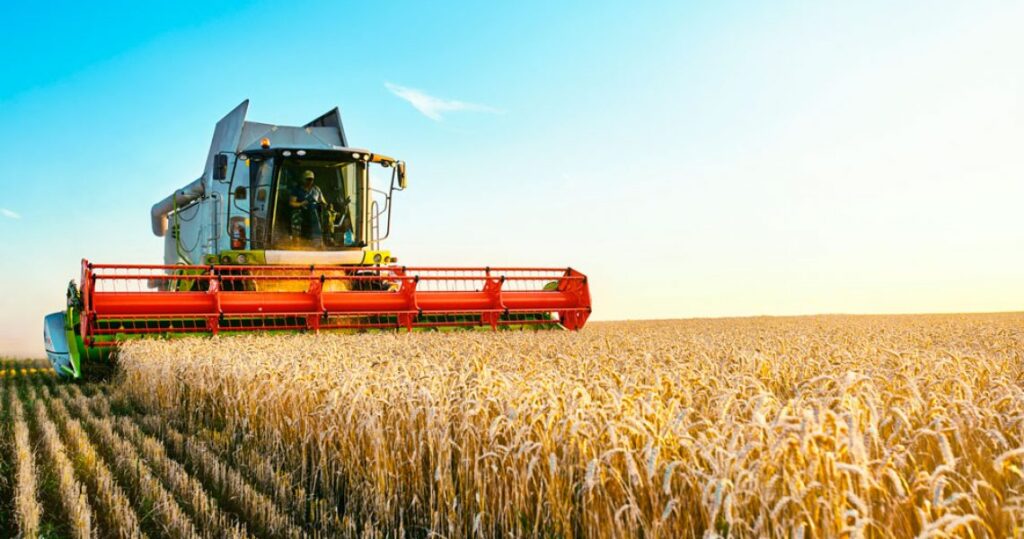
More than 50% of the combined harvester fleet is more than 15 years old, and, obviously, these machines do not offer the latest technology. The other half is less than 15 years old, but very few have the technology of the last 3 to 5 years. There is a very big opportunity to technify the field, Fernandez explained.
Marcus Adrián Cheistwer, President of the Association -also CEO of CNH Industrial Argentina-, said that the countryside represents 70% of the exports, showing the exent to which the sector is the driving force of the economy. “History tells us that, even with drought and economic crises, if the countryside is given funding possibilities, it does not stop investment. From 2001 and on to now and trying to apply the short-term memory, all these crises, both economic and environmental, the countryside has been main character of the recovery,” said the President.
Currently, there are no indebted producers and, with adequate financing rates, we can expect a semi-rapid replacement of machines, and, by 2023, a market similar to that of the year 2022. The recovery can be fast, depending on the availability of finished products, or on the possibility of good plant operations with the availability of raw material.
“Weather is an important factor but not the main, we can’t manage it and, with technology, we can also manage the after effect of a drought,” said Marcus Cheistwer