
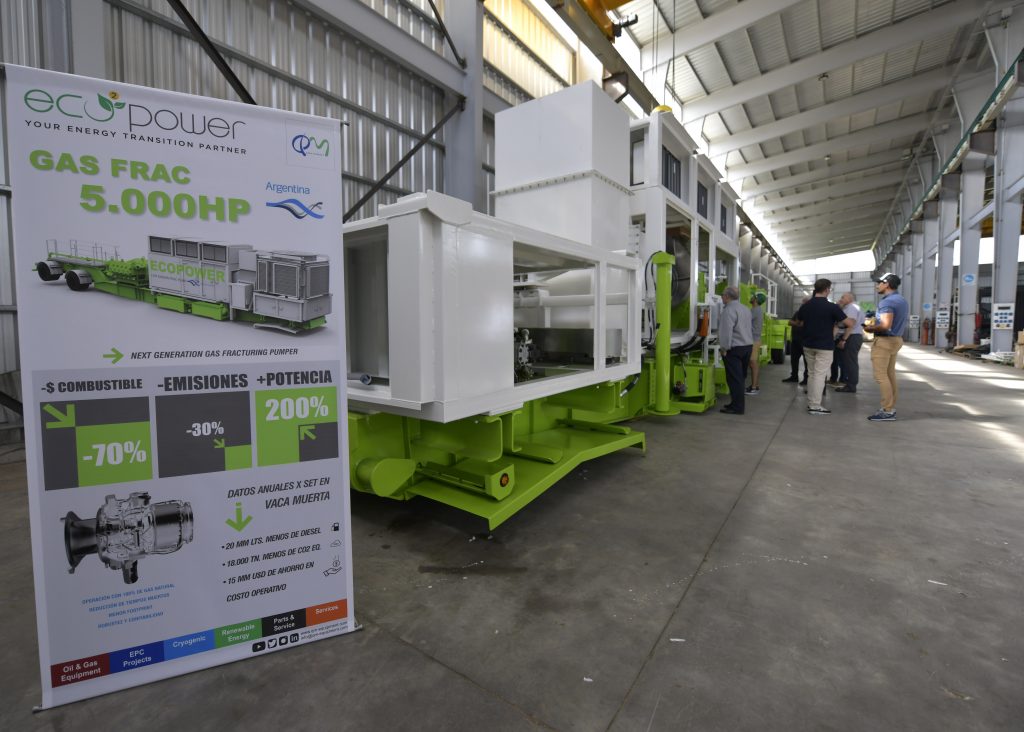
YPF and Schlumberger (SLB) have begun testing a prototype natural gas fracturing rig in the Loma Campana field in Vaca Muerta that, if successful, will save millions of litres of diesel oil per year in Vaca Muerta and reduce emissions in upstream operations. The field tests will last several months and then mass production will begin, sources familiar with the initiative told EconoJournal.
YPF became interested in this project two years ago, at the request of the province of Neuquén, and from the outset offered Eco2Power the possibility of carrying out the tests in its fields.
The project is now entering an extremely important stage. After analysing different alternatives, YPF decided that the best environment for the tests’ development is provided by the SLB fracturing group operating in Loma Campana. The plan is to start pumping in June with the prototype operated by Eco2Power and integrated to the SLB set.
“It is a very innovative technology, it is cutting edge what we are doing. It is the result of many years of manufacturing this equipment, of understanding our customers’ business, whattheir costs are, the problems they have and the things they want to improve,” Pablo Fiscaletti, president of QM Equipment, told EconoJournal in February this year.
Currently, for each fracturing stage, the pumps need about 11,500 litres of grade 3 diesel, that is, premium grade diesel.
The equipment
The prototype fracker is powered by a 5000 hp SPG drive train and equipped with a 5000 hp SPM pump, developed by Eco2Power and integrated in Argentina by QM at its Mar del Plata plant.
The core of the equipment is a turbine that uses CNG as fuel, significantly reducing the carbon footprint and the cost of fuel and maintenance, compared to conventional engines that consume gasoil.
The weight / power ratio of the turbine, combined with the new generation of 5000HP SPM pumps, allows doubling the effective hydraulic power of each unit, thus significantly reducing the footprint of the equipment and the associated costs and environmental impact.
SOURCE: econojournal.com.ar