
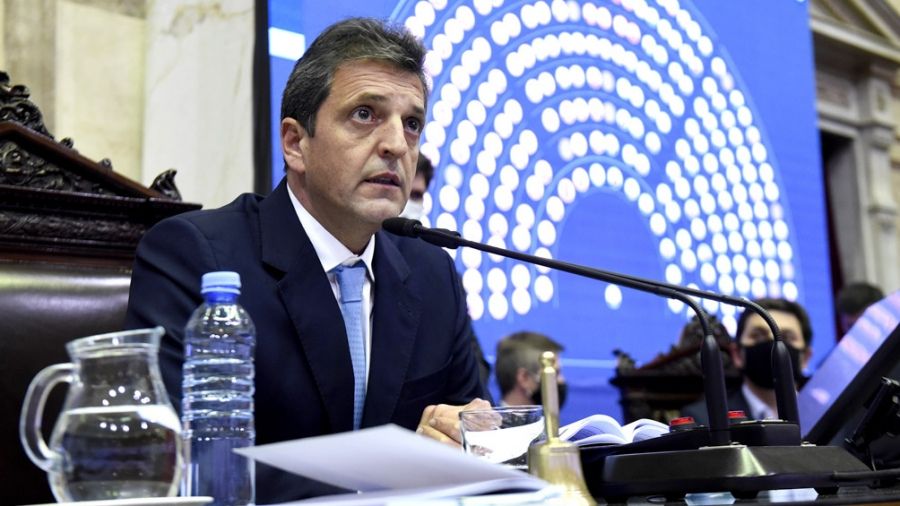
A week of uncertainty was brought to an end when the return of ex minister, Silvina Batakis, triggered a string of announcements of various cabinet changes. The most important of these was Lower House Speaker, Sergio Massa, being named a super minister to replace, not only Batakis (who had placed he resignation at the disposal of President, Alberto Fernández, soon after her return), but also Productive Development Minister, Daniel Scieli (who thus returns to the Argentine Embassy in Brasilia, less than two months after vacating it), and Agriculture Minister, Julián Domínguez – in other words, all three portfolios are rolled into one. One persistent rumor had Massa replacing Cabinet Chief, Juan Manzur, who would then be shuffled to the Interior Ministry, displacing Eduardo de Pedro, but both officials stay where they are for now, as do most of the ministers, although rumors of a Cabinet shrinkage are in the offing. The Cabinet shuffle kicked off on early July 28th with the resignation of strategic affairs Secretary, Gustavo Beliz, who will be replaced by Mercedes Marcó del Pont. Massa will be replaced as Chamber of Deputies, by deputy Cecilia Moreau, who hails from the same Renewal Front wing of the ruling Frente de Todos coalition as the new super minister. More changes might yet be announced.
THE MESSAGE
Sergio Massa resigned his Congress seat on July 26th (with Cecilia Moreau, who has been under his wing since 2014, now becoming Argentina’s first female speaker, while picker activist, Juan Marino, replaced him as deputy) and was sworn in as Economic Minister after 5 pm on July 27th, making his first announcements immediately afterwards. The new minster pledged himself to meeting targets in the agreement with the International Monetary Fund reached earlier this year (including a fiscal deficit of no more than 2.5 percent of gross domestic product, while not printing money beyond one percent of GDP).
He also upheld the freezer on state employment, previously ordered by his predecessor, Silvina Batakis. Massa went one further on the energy subsidy cuts beginning under Batakis, and Martín Guzmán before her, not only removing them high-income segments (as already established) but for all sectors beyond a certain level of consumption – Massa accepted that higher public service billing would be the consequence. The incoming minister promised a new deal for the mining, farming, oil and gas sectors, in order to encourage them to accelerate their exports and bring dollars. Yet, he would also be looking both abroad and at home for the latter in the form of loans from local commercial banks and credits from international organization, also seeking to tap Gulf states via sovereign bonds. He promised a crackdown by Customs (now in the hands of his most trusted aides, Guillermo Michel) on the over invoicing of exports. The delicate area of social plans would also be reordered, Massa announced without going into too many details. Finally, he announced a bonus for pensioners, while de Minimum Wage Council is to be convoked to set a new pay floor.
THE TEAM
On the eve of becoming Economy minister, Sergio Massa had already defined his team with the exception of his deputy minister, while Energy Secretary, Darío Martínez, remained in doubt with his confirmation still pending. Key future aides include Secretaries, José Ignacio de Mendiguren (Production), Matías Tombolini (Commerce), Raúl Rigo (Treasury), Jorge Neme (Planning) and Juan José Bahillo (Agriculture), the main surprise in the future team.