
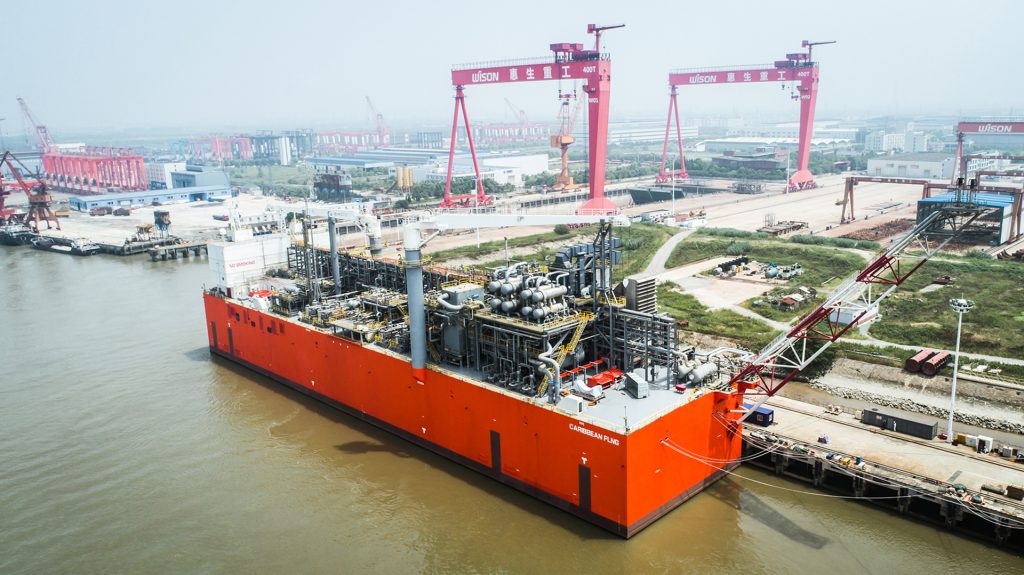
The government introduced a draft bill to promote investment in Liquefied Natural Gas (LNG) liquefaction plants. It came after Argentina’s state-controlled oil company YPF signed an agreement with Malaysia’s Petronas in September last year, to jointly develop an integrated LNG project in Argentina, encompassing upstream unconventional gas production, pipeline and infrastructure development, LNG production, marketing and international logistics.
The idea is taking advantage of Vaca Muerta’s potential, although the risk is so big that it will require a multi-million dollar investment over several years. Javier Rielo, CEO of Total Energies, a company with extensive experience in this type of undertaking, explained at the Midstream & Gas Day, organised by EconoJournal, the complexity of such an initiative.
Rielo questioned the advisability of moving forward with the construction of an LNG plant in the country. “To build an LNG plant, you have to think about a production of 9 or 10 million tonnes per year. You must have an integrated project. An LNG plant alone does nothing. You must have an LNG plant and a pipeline to transport the gas, something like a Néstor Kirchner III pipeline, and 200 wells in production to guarantee the necessary volume with facilities to treat it. When all that is accounted for, we are talking about more than 10 billion dollars,” he said, putting a cooler note on the initiative.
“In Australia, we have built a 9 million tonne project that costed US$20 billion. We have built another 9 million tonne offshore project; it costed $40 billion. Those are the numbers we have to deal with. The Petronas project, which I had the opportunity to see, is 20/25 million tonnes and involves an outlay of some tens of billions of dollars,” Rielo said.
He went on warning about the work timeframe . “If all the lights are green, a project of these characteristics will not be finished in less than seven years. Then, you have to put all this into an economic model and start with the price. Last year, we all thought that the LNG price was 40 or 50 dollars per million BTU; Today, we are at an international price of 7 or 8 dollars. What will the price be tomorrow? Who knows? Every time we have forecasted, we were wrong,” he said.
“It’s all very complex. If you add project finance, it’s even worse, because you have to present contracts for 15 years with, at least, 90% of the plant’s capacity sold. Then, there is the project finance’s cost . In Australia, the cost of project finance was Libor plus 7/8%. In Argentina, I don’t know if we are getting 7/8%,” he said.
For Rielo, the key is selling to neighbouring countries. “The internal gas supply will be assured with the first inauguration of the Néstor Kirchner gas pipeline. We must attack the regional market. These are not significant investments and we can supply the demand with a volume similar to the one the LNG plant that Petronas and YPF are considering,” he concluded.
SOURCE: econojournal.com.ar